Tracing Japanese Brazilian Ancestors: Where to Start
Published Updated By TADOROOTS Research Team
Maybe your family has been in Brazil for three, four or even five generations. Your surname is Japanese, your first name is Portuguese, and the story of how it all began lives in a few photos, a grandparent's memories and perhaps the name of a ship. Somewhere in Japan there is a village where it started — but which one?
If that sounds familiar, you're far from alone. Brazil is home to the largest community of Japanese descent outside Japan, and many families want to reconnect the two sides of their story. Here is the encouraging part: even after several generations in Brazil, it is often possible to trace a family back to its hometown in Japan.
We're the research team at TADOROOTS in Tokyo. We read old Japanese family registers every day to build family trees, including for Nikkei families abroad. In this article you'll learn:
how Japanese emigration to Brazil worked, and why it shapes your search
which records in Brazil and in Japan can hold clues
why names in Brazilian records may look different from the Japanese original
how the search leads to your ancestors' family register (koseki) in Japan
How did Japanese emigration to Brazil begin?
Organized Japanese emigration to Brazil began in 1908, when the Kasato Maru arrived at the port of Santos on June 18 with 781 contract emigrants bound for the coffee plantations of São Paulo state. Early emigration ran through emigration companies under contracts with the São Paulo state government, and it brought mostly families rather than single workers.
Arrivals peaked in the late 1920s and 1930s. Emigration resumed after the Second World War and continued until the last emigrant ship in 1973. Today, the number of people of Japanese descent in Brazil is roughly two million or more; a recent Japanese government estimate puts it at around 2.7 million.
Knowing roughly which period your ancestors arrived in helps a great deal, because the records kept before the war and after it are different.
What records in Brazil can help?
Brazilian immigration records, civil registration records and family papers can each hold clues to when your ancestors arrived and where in Japan they came from. Places and documents worth looking into include:
Passenger and arrival lists. Brazil's National Archives (Arquivo Nacional) explains how to search the arrival lists of foreigners at Brazilian ports. The São Paulo State Archives also hold immigration records, including the list of the Kasato Maru.
Immigrant registration cards and foreigner registration documents, which can include a place of birth or a prefecture.
Civil records — births, marriages and deaths in Brazil — which sometimes name the parents' birthplace in Japan.
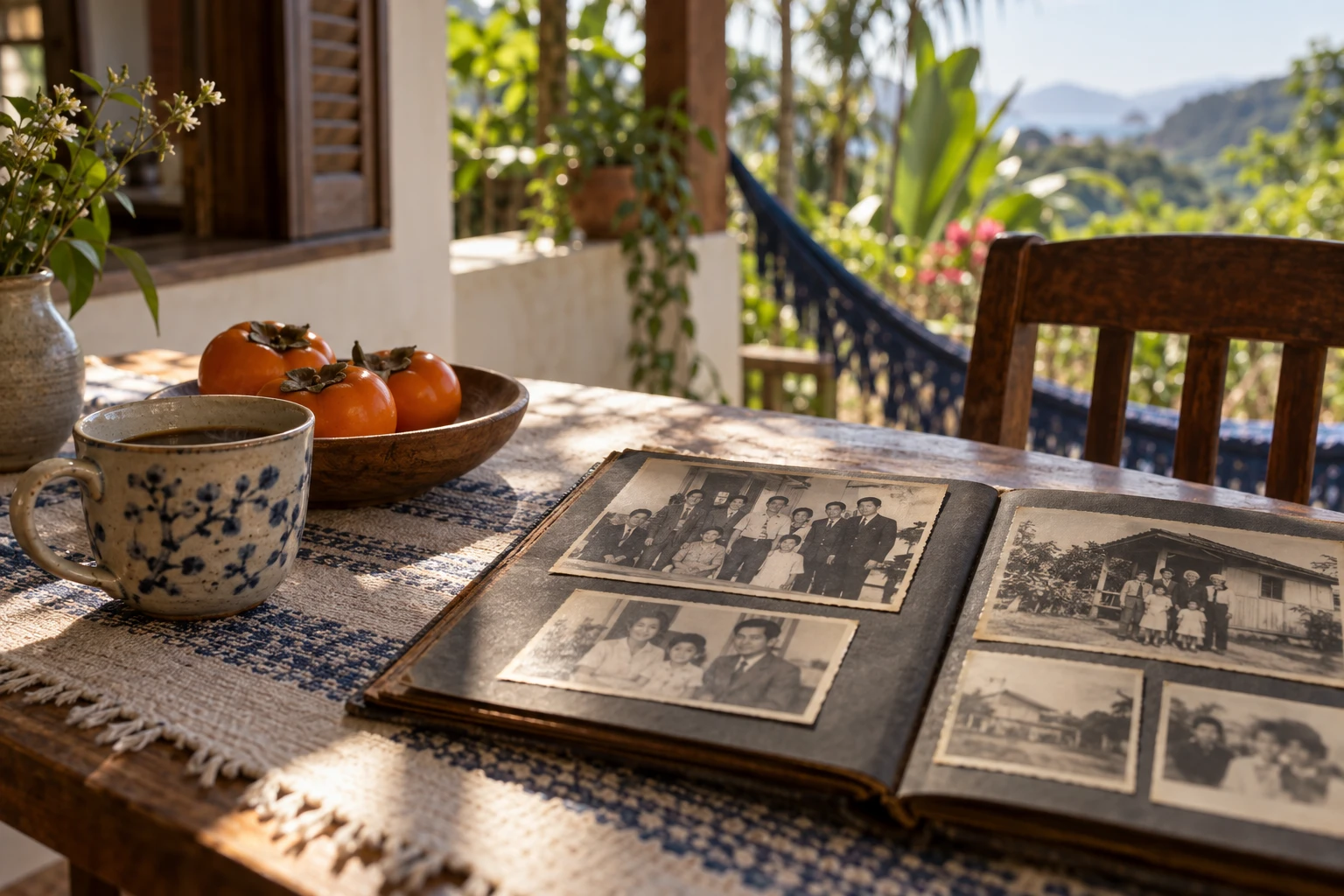
Family papers: passports, letters from Japan, photos with writing on the back, and Buddhist altar tablets or gravestones with kanji.
Kenjinkai — associations organized by the immigrants' prefecture of origin — have also been part of community life, especially in São Paulo and Paraná. If your family belonged to one, that alone points to a prefecture.
Why do names look different in Brazilian records?
A Japanese surname can appear in several spellings in Brazilian records, because names were written down by ear and with more than one way of romanizing Japanese. Many Japanese Brazilian families use a romanization in which Yamaguchi is written "Yamaguti" and Kikuchi "Kikuti," and officials sometimes adapted names further to Portuguese spelling. Many Brazilian-born children were also given Portuguese first names, sometimes at baptism.
What this means for your search:
Collect every spelling you find, and note which document it came from.
Never guess the kanji of a surname from the romanized spelling. Many different kanji can share one pronunciation, and only the Japanese record can confirm the right one.
Look for a Japanese name alongside the Portuguese one in family papers; Issei often kept both.
What records in Japan can help?
The key Japanese record is the koseki, Japan's family register, kept by the town office of the family's registered home (honseki) — not where they lived. Emigrants usually left with their register still in their home village, so it often remains there today, sometimes with notes about family members abroad.
Some families reported the birth of children born in Brazil to a Japanese consulate, so a register in Japan can list children born in Brazil. Other Japanese sources that can help:
Prewar passport records, kept at the Diplomatic Archives of Japan's Ministry of Foreign Affairs
The National Diet Library's online exhibition "100 Years of Japanese Emigration to Brazil," which explains how emigration was organized
JICA's Japanese Overseas Migration Museum in Yokohama, which introduces the history of emigration
One more thing to keep in mind: the village your ancestors left in the early 1900s may since have merged into a larger city or town. Japan has over 1,700 municipalities today, and older village names often survive only as district names.
How does the search reach your ancestors in Japan?
Once the honseki is known, the koseki can be requested by post from that town office, on the written authorization of a direct-line descendant. Under Japan's Family Register Act, direct ancestors and descendants can request registers without giving a reason, so a great-grandchild in Brazil is eligible for a great-grandparent's register.
A few practical points:
The request and the reply are in Japanese. Fees are 450 yen per current register and 750 yen per closed or older register, normally paid with Japanese postal money orders, which are hard to get abroad.
Each exchange by post commonly takes a few weeks, and each register tends to point to the next one.
The oldest registers generally available are in the 1886 (Meiji 19) format, which often record ancestors born in the early to mid-1800s.
In summary
Japanese emigration to Brazil began in 1908, and knowing when your ancestors arrived narrows the search.
Brazilian arrival lists, civil records and family papers can lead to a prefecture or village — but keep every spelling and don't guess the kanji.
The koseki in your ancestors' registered home is the key to tracing the family in Japan.
Four or five generations in Brazil is not too far: a single clue is often enough to begin finding the way back.
How TADOROOTS can help
We help Japanese Brazilian families connect the Brazilian side of their story to the family's roots in Japan. We work out the registered home, identify which registers to request and from which town, prepare the paperwork for the direct-line descendant's written authorization, read the old handwritten registers, and build a family tree with an English report. You can see how our step-by-step pricing works. We can work with you in English, Chinese, Korean or Japanese.
Frequently asked questions
Q. My family has been in Brazil for four or five generations. Can we still trace them in Japan?
Often, yes. It depends on how much information about the family's registered home in Japan survives in family papers or Brazilian records. The further from the immigrant generation, the more the search relies on indirect clues, but a single prefecture or ship name can be enough to start.
Q. When did Japanese emigration to Brazil start?
Organized emigration began in 1908. The Kasato Maru arrived at Santos on June 18, 1908, with 781 contract emigrants for the coffee plantations of São Paulo state. Arrivals peaked in the late 1920s and 1930s and resumed after the war until 1973.
Q. Why is my surname spelled differently in Brazilian documents?
Names were written down by ear and with different ways of romanizing Japanese — Yamaguchi, for example, often appears as "Yamaguti" in Brazil — so the same surname can appear in several forms. Keep every spelling, and let the Japanese record confirm the correct kanji rather than guessing.
Q. Where in Brazil can I find my ancestor's arrival record?
Brazil's National Archives (Arquivo Nacional) explains how to search arrival lists of foreigners at Brazilian ports, and the São Paulo State Archives hold immigration records, including the Kasato Maru list.
Q. Can I request a koseki from Brazil?
Yes, by post, if you are a direct-line descendant of the person in the register. The request is in Japanese, fees are normally paid with Japanese postal money orders, and each exchange commonly takes a few weeks.
Q. Do I need to speak Japanese or Portuguese?
No. You can work with us in English (Chinese, Korean and Japanese are also available). If some of your documents are in Portuguese, a short note in English on what each one is helps a lot.
Q. Could the register list relatives born in Brazil?
Sometimes. Some families reported the births of Brazilian-born children to a Japanese consulate, so their names can appear in the family's register in Japan.