Japanese family history research, from TokyoRoots Journal日本語
Replies Mon–Fri, Japan time
Japan Roots · for Nikkei families worldwide

Find where your
Japanese family
comes from.

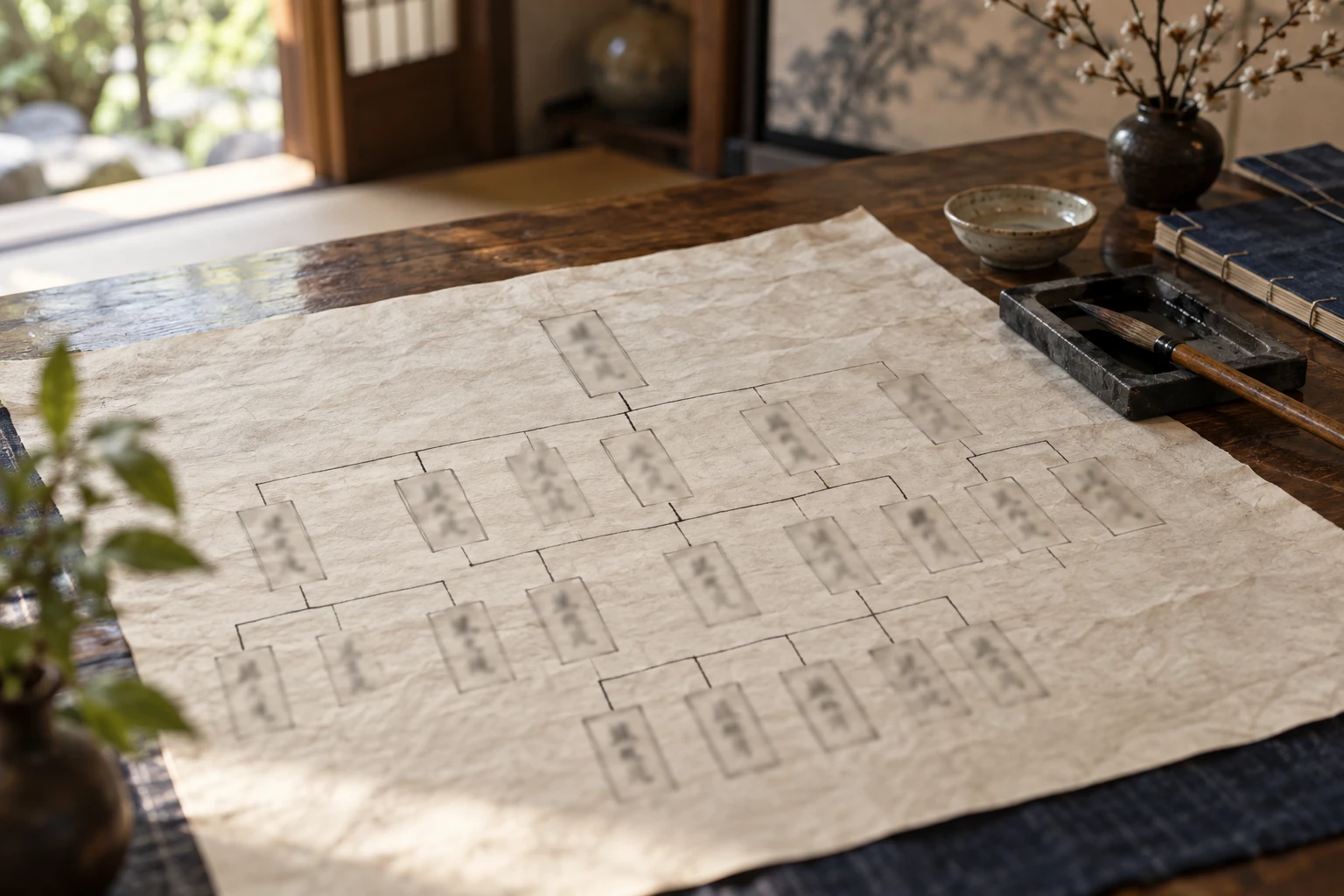
We trace your family through Japan's official family registers (koseki) and turn what we find into an English family tree — often back to ancestors born in the late Edo period. No Japanese needed.

  • Free first reply
  • English · 中文 · 한국어 · 日本語
  • Pay by card from anywhere
Who it's for

People with Japanese roots, wherever you are.

Whether your family left Japan generations ago or a DNA test has just told you about Japanese ancestry, we help you find the people and places behind it.

Nikkei families worldwide

Japanese Americans, Japanese Brazilians, Japanese Canadians, and families in Hawaii, Peru, Australia and beyond.

A DNA result pointing to Japan

A DNA test can tell you that you have Japanese ancestry. The family registers can tell you who, and where.

Adoptees

Learn about your Japanese family background and hometown through official records, at a pace that feels right for you.

A gift for someone you love

Trace a parent's or partner's Japanese family as a lasting gift for them and for the generations after them.

About the koseki

Japan's family registers

戸籍 (koseki) — the family register

Since the 1870s, every Japanese family has been recorded in a register kept by its home town. Each register lists the members of a household with their births, marriages, adoptions and deaths, and points to the register each person came from — so you can follow a family back one register at a time. The registers are not public: they are issued only to the people named, their spouses, and their direct line.

What the registers can show

  • Your ancestors' names in kanji, with their birth, marriage and death dates
  • The family's registered hometown (honseki) — prefecture, town and village
  • Where your emigrant ancestor fits in the family that stayed in Japan
  • Earlier generations — often back to ancestors born in the late Edo period (early to mid-1800s)
  • Changes of family name through marriage or adoption, and branch families

What they don't show

  • Family crests (kamon), photographs, or occupations
  • Why the family emigrated — we look for that in other records and family stories
  • Living cousins' contact details — you can only request records of your own direct line
How it works

Four steps to your family history.

1
Send us a message (free)
Tell us what you know — names, places, dates, documents, family stories. We'll reply in English with what looks possible and what we'd need.
2
Pre-research ($150)
We review your documents and look for the family's registered hometown (honseki), which is the key that opens the Japanese records. You get a written assessment and a plan before deciding anything more.
3
Authorization and record requests
Japanese family registers are issued only to the person, their spouse, and their direct line. A direct-line descendant signs a letter of authorization, and the records are requested from the town offices in Japan by post.
4
Research and your English family tree
We read the old handwritten registers, follow each generation back, and deliver an English family tree and report. Most projects take 3–6 months in total.
Pricing

Pay step by step.

Start small. After the pre-research you'll know whether your family's hometown can be found and what the next step would cost, before you decide. Prices are in US dollars.

Step 1
Pre-research
$150
  • Review of your names, dates and documents
  • Search for the family's registered hometown (honseki)
  • Written assessment and a plan for the next step
Step 2 · hometown not yet found
Hometown search
$500–$1,500
  • Search through immigration, naturalization and archive records
  • Once the hometown is found, the koseki research can begin
  • Translation of documents$50–$80 per page
  • Japan Roots Tour — visit your family's hometown and grave with our guidancefrom $500 + expenses
Languages

We speak your language.

We can work with you in any of these languages. You never need to read Japanese.

English中文(繁體・简体)한국어日本語
FAQ

Frequently asked questions

If the older registers still exist, families can often be traced back to ancestors born in the late Edo period (early to mid-1800s). The oldest registers generally available are in the 1886 (Meiji 19) format. Some older registers were lawfully destroyed when the retention period was shorter, so we'll tell you honestly what's possible after the pre-research.

No. We work with you in English (Chinese, Korean and Japanese are also available), and we read and translate the Japanese records for you.

Japanese family registers can be issued only to the person named, their spouse, and their direct ascendants and descendants. So the request is made on the written authorization of a direct-line descendant — usually you or a parent. We tell you exactly which records to request and prepare the paperwork with you.

Often, yes. The family's registered hometown (honseki) is the key, and it can sometimes be found from immigration papers, naturalization files, gravestones or old letters. The pre-research tells you whether it can be found before you commit to more.

Pre-research is $150. If the registered hometown is found, the main research and English family tree is $800–$8,000, depending on how many family lines and generations you'd like traced. If it is not found yet, a search through immigration and archive records is $500–$1,500. You always get a quote before each step.

Most projects take 3–6 months in total. Requests to town offices in Japan go by post, and each answer can lead to the next request, so the timing depends on how many generations and towns are involved. We keep you updated along the way.

Yes, as a hint. DNA can suggest a region and point to possible relatives, but the family registers are what confirm names, places and relationships. Share what you have and we'll use it in the plan.

Prices are in US dollars, and you can pay by international credit or debit card through Stripe.

Ready to find
where you come from?

Tell us what you know — even a single name is a start. We'll reply in English with what looks possible for your family.

We usually reply within two business days (Japan time).

Message us (free) →