What Is a Kamon? Your Japanese Family Crest Explained
Published Updated By TADOROOTS Research Team
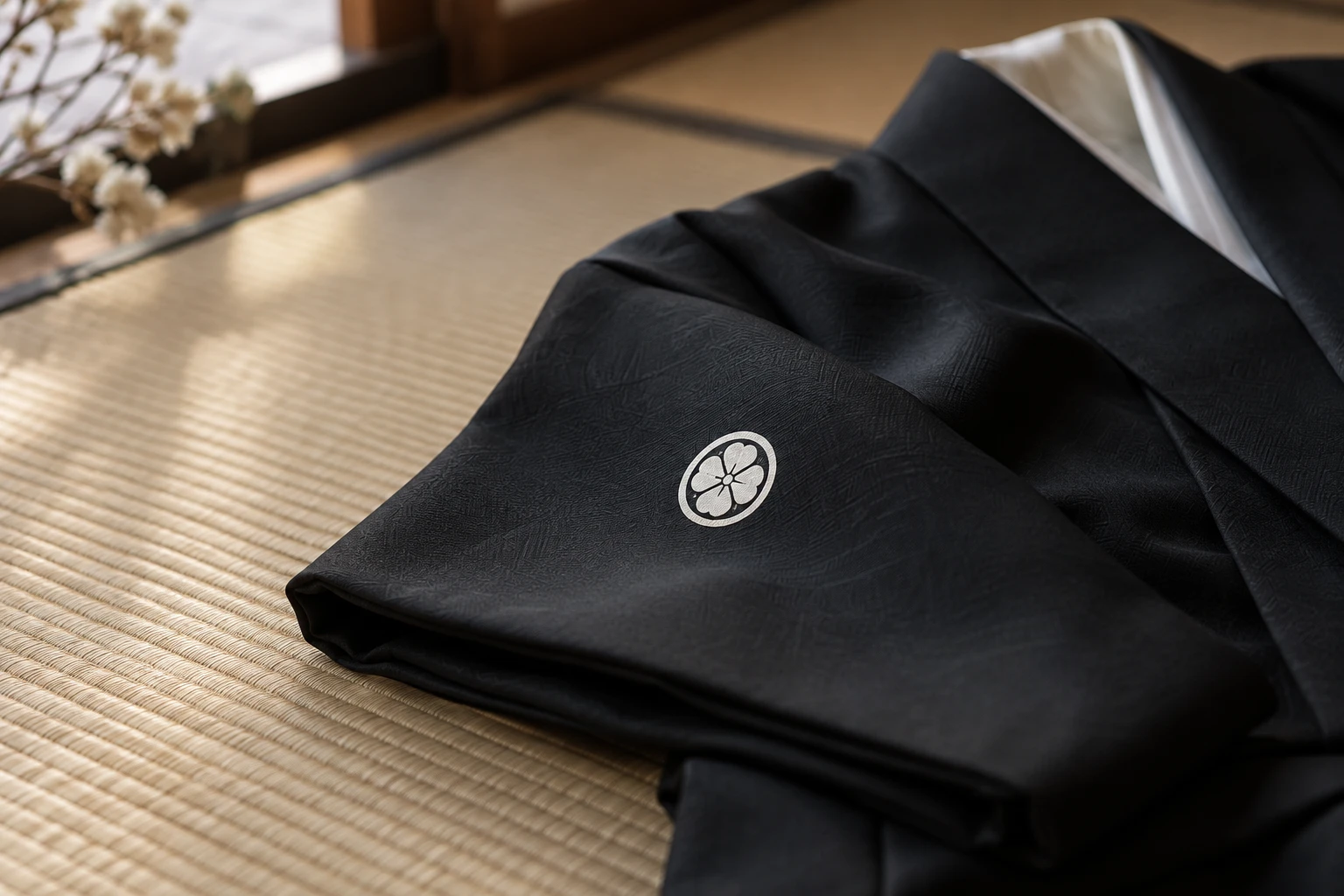
Maybe it turned up while sorting through a closet: a black silk kimono with a small white emblem on the sleeves and back. Or perhaps it's carved at the top of a family gravestone in a photo someone sent from Japan. Nobody in the family is sure what it means, only that it must be important.
If you've wondered about a crest like this, you're far from alone. Many families with Japanese roots find a kamon before they find much else. Here is the encouraging part: a family crest is real evidence, and while it rarely identifies a family on its own, it can add color and confirmation to a family tree traced through records.
We're the research team at TADOROOTS in Tokyo. We read old Japanese family registers every day to build family trees, including for Nikkei families abroad. In this article you'll learn:
what a kamon is and where families tend to find one
what a kamon can and can't tell you about your ancestors
why the family register doesn't record it
how to use a crest as a clue in your research
What is a kamon?
A kamon (家紋) is a Japanese family crest: a small emblem, often a stylized plant, animal or geometric pattern, frequently set inside a circle, used to mark a family's identity. It plays a role somewhat like a coat of arms in Europe, though it was used far more widely.
Families commonly put their kamon on:
formal kimono, usually in white on the back and sleeves
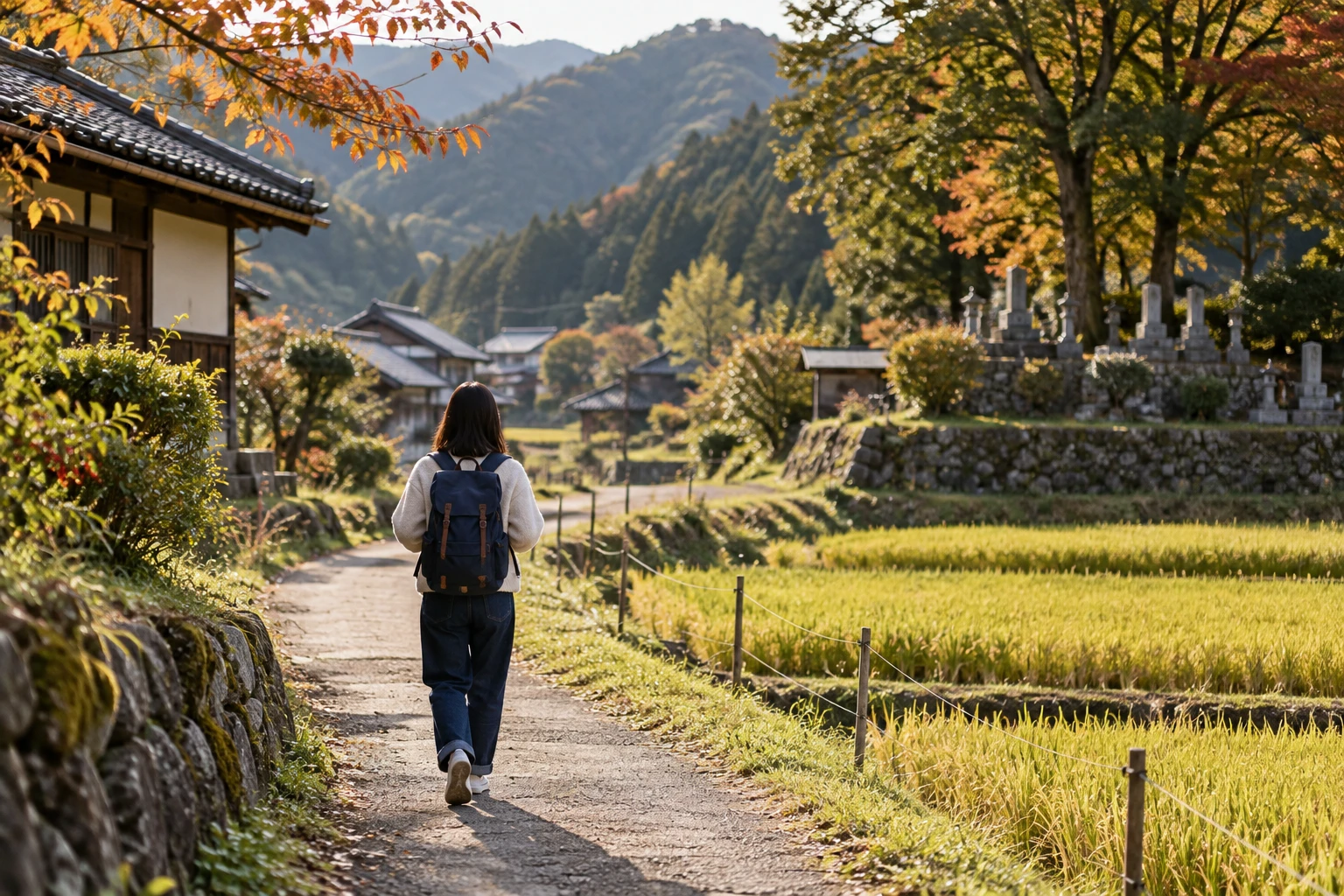
gravestones, often carved above or beside the family name
household items such as lacquerware, chests, lanterns and boxes
family altars and items used for ceremonies
Kamon spread well beyond the aristocracy and samurai to merchants and farmers, more commonly from the Edo period onward. That is one reason so many ordinary families, including emigrant families, have one.
How many kamon designs are there?
Counting variations, reference books list well over ten thousand kamon designs, built from a few hundred basic motifs. Among the most familiar are wisteria, oak leaves, paulownia, plum blossoms and geometric patterns.
For example, a circle around three oak leaves and a design of three oak leaves without a circle count as different crests. Small changes — a ring, a different number of petals, a shift in angle — create new designs. That is why identifying a crest exactly matters, and why a clear photo is so valuable.
What can a kamon tell you, and what can't it?
A kamon can support a family line you are already tracing, but it can't prove a family connection by itself, because many unrelated families used the same designs. Two families with the same crest are not necessarily related, sometimes not even distantly.
What a crest can do:
confirm that an heirloom, gravestone or photo belongs to the line you are tracing
link branches of a family who kept the same crest
add texture to a family tree, especially when it matches a known registered home or family temple
What it usually can't do:
identify a family or a village on its own
prove samurai or any particular social status
replace the family register as the core record
Some designs, like variations of the paulownia, were used so broadly that seeing one tells you very little alone. Rarer designs narrow the possibilities more, but even then a kamon works best alongside other evidence.
Is a kamon recorded in the koseki?
No. The koseki, Japan's family register, does not record kamon, and there was never an official registration system for family crests. The koseki records legal facts — names, births, marriages, adoptions and deaths — and has no place for a crest.
This has two practical results:
you won't find your crest by requesting a family register
a family's crest was passed down through custom, so the evidence lives in kimono, gravestones, heirlooms and memory
It also means that not knowing a crest is nothing to worry about. Many families never used one consistently, and its absence doesn't mean anything is missing from your research or says anything reliable about your ancestors' status.
How can you use a kamon in your research?
Start by recording the crest carefully, then use it alongside the family register and other records rather than as a starting point on its own. These steps help:
Photograph it clearly. Take a straight-on photo in good light, plus a wider shot showing where it appears — a sleeve, a gravestone, a box lid.
Note where it came from. Write down which side of the family the item belongs to and who owned it.
Look for it in more than one place. The same crest on a kimono and on a grave photo is stronger evidence than either alone.
Compare it with reference books. Kamon reference books, many of them available in libraries, arrange designs by motif.
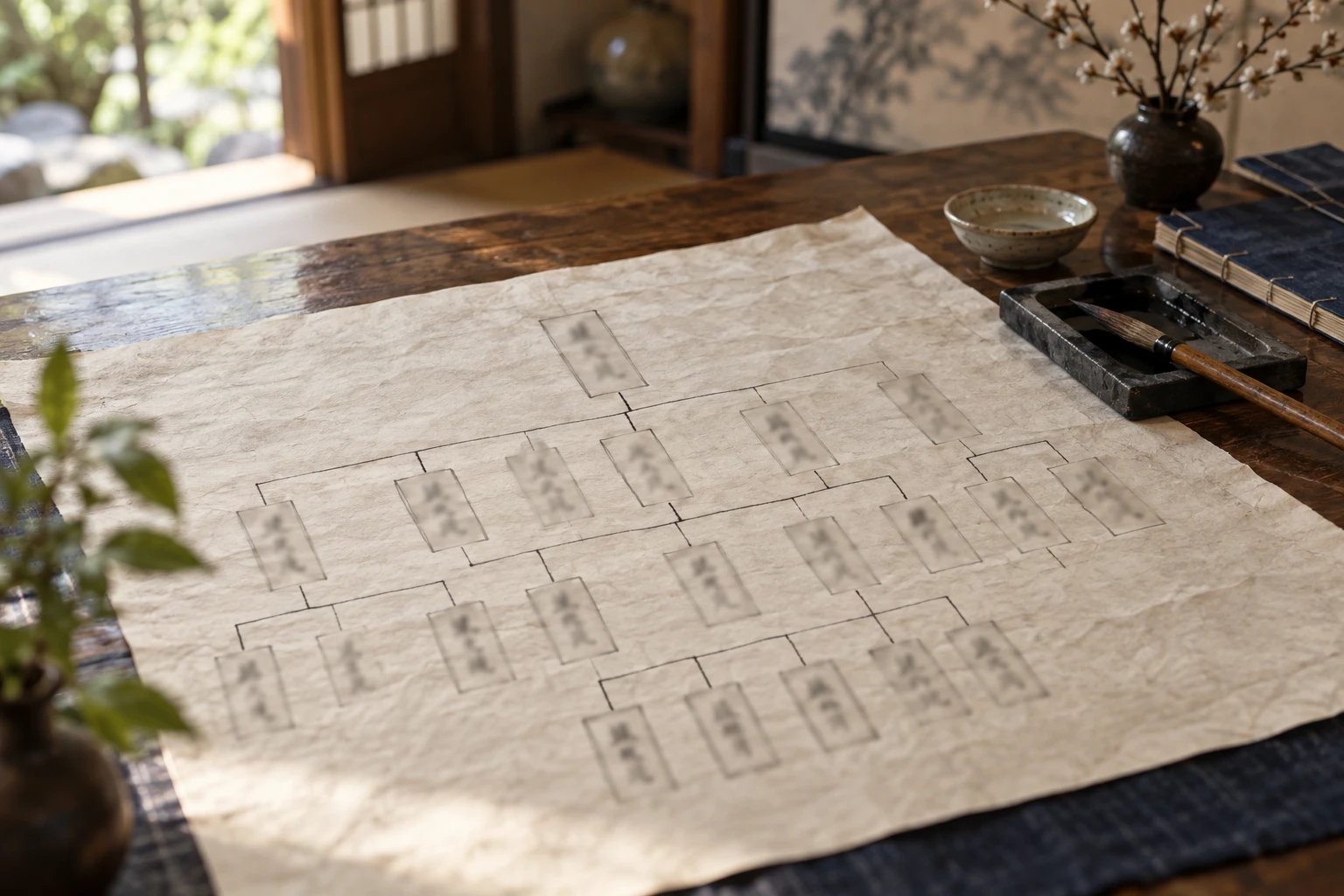
Connect it to the family tree. A crest becomes most meaningful when it sits next to a confirmed registered home and the names in the koseki.
When photographing a family grave in person, it's best to do it as part of paying your respects, keeping the grave as you found it.
In summary
A kamon is a Japanese family crest, often found on formal kimono, gravestones and heirlooms.
Many unrelated families share designs, so a crest supports a family line but doesn't prove one.
The koseki does not record kamon, and there was never a registration system, so the evidence lives in family items and memory.
A crest on an old kimono can become a beautiful part of your family tree once it sits beside the names it belongs to.
How TADOROOTS can help
We help families abroad build a family tree with every piece of evidence in its place. We work out which registers to request and from which town office, prepare the paperwork for the written authorization (power of attorney) of a direct-line descendant, then read and translate the registers into an English family tree and report. When a crest has been identified, we document it alongside the registers, so it becomes part of your family's story rather than a mystery on a sleeve. You can see how our step-by-step pricing works, starting with a small pre-research. We can work with you in English, Chinese, Korean or Japanese.
Frequently asked questions
Q. What is a Japanese kamon?
A kamon is a Japanese family crest, a small emblem often based on a plant, animal or geometric pattern and frequently set inside a circle. Families put it on formal kimono, gravestones and household items.
Q. Does having the same kamon mean two families are related?
Not necessarily. Many unrelated families adopted the same designs over the centuries, so a shared crest is a clue to follow, not proof of a connection.
Q. Is my family's kamon recorded in the koseki?
No. The koseki records legal facts such as births, marriages, adoptions and deaths, and it does not record kamon. There was never an official registration system for family crests.
Q. Did only samurai families have a kamon?
No. Kamon spread well beyond the aristocracy and samurai to merchants and farmers, more commonly from the Edo period onward, so many ordinary families have one.
Q. My family doesn't know its kamon. Does that mean something?
Not reliably. Many families never used a crest consistently, and not knowing one doesn't say anything dependable about your ancestors' status or leave a gap in your research.
Q. How many kamon designs exist?
Counting variations, reference books list well over ten thousand designs, built from a few hundred basic motifs such as wisteria, oak leaves, paulownia and geometric patterns.
Q. Can a kamon be identified from a photo?
Often, if the photo is clear enough to show the details. A straight-on photo in good light can be compared with kamon reference books, which arrange designs by motif.